
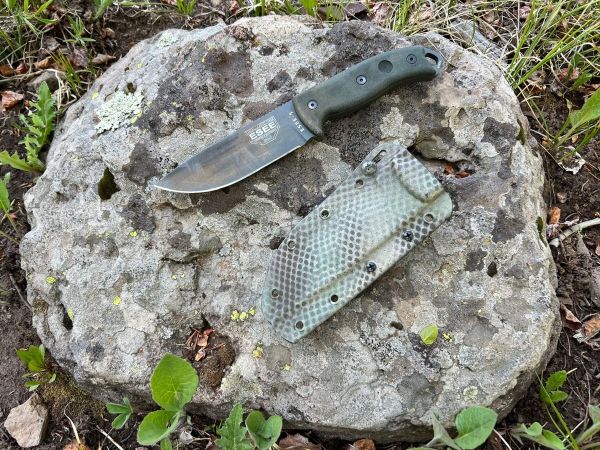
Micarta is a material that’s frequently used for knife scales and handle material. It’s basically just fabric that’s been layered and epoxied, then cut and shaped to size. It’s generally pretty durable and is a favored material for hard use and field knives. Sometimes, however, we want to change its color for aesthetic appeal, or just to follow Rule #1: Always Look Cool.
Whatever the reason you’d like to dye your micarta scales, here’s a simple method that works well and has some good longevity.
It’s important to know that we can generally only dye material to a darker color. Starting out with a lighter color micarta is best, so if it’s tan or khaki, all the better. I bought an ESEE 5 a while back and wanted the dark gray blade coating instead of the black. This model was only available with tan handle scales and since I was going to paint the sheath to follow Rule #1, it made sense to get the tan handles and dye them myself. This knife is destined to be beaten through all sorts of things, so I felt like a little customization was fitting.
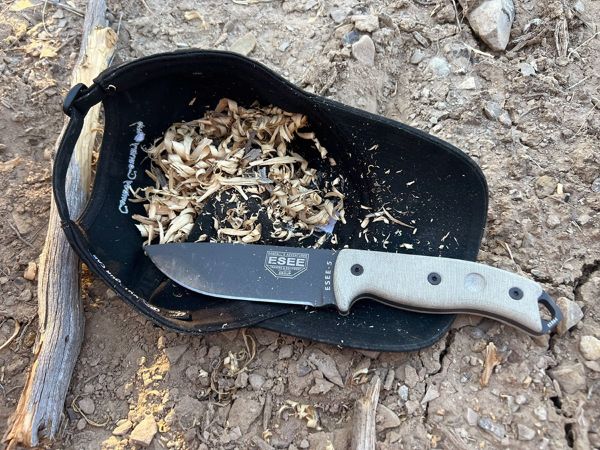
Here’s how it looked when it arrived. The dark gray blade coating is nearly black, so I’m not sure why I bothered to be so particular in the first place. But once it was in hand, I decided to press on with the plan.
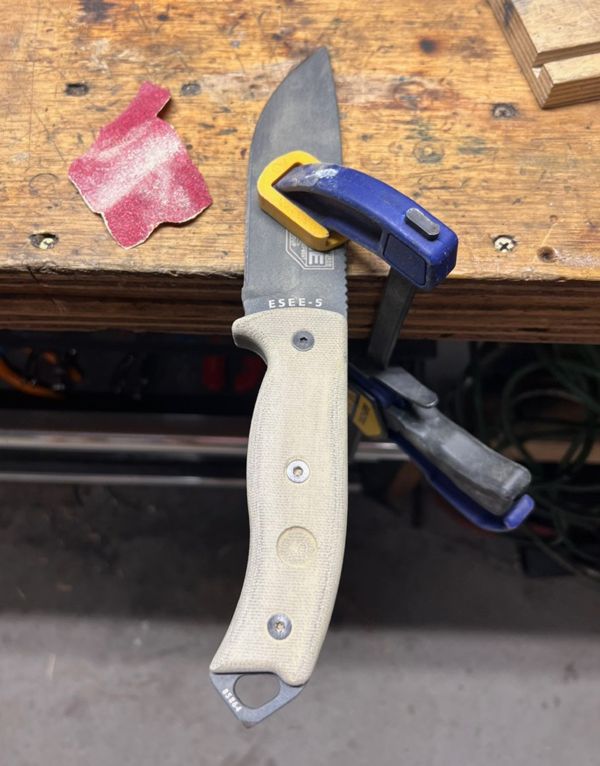
The first step was to clamp it to the bench and do some light sanding and shaping on the corners of the handle scales. If you do this, take care not to change the portion of the handle that locks into the Kydex sheath, or else you might end up with a knife that doesn’t stay put. After some contouring, I removed the scales to do the dye job.
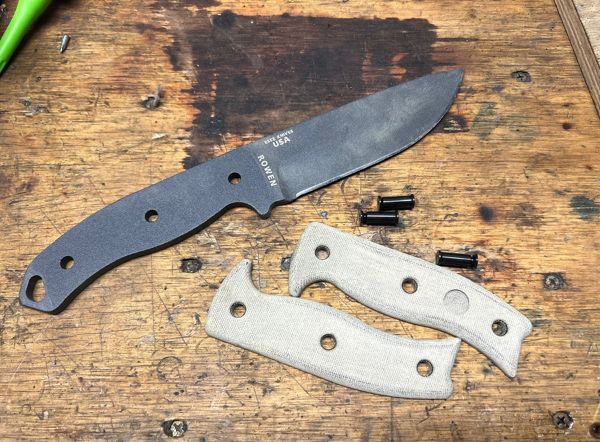
I use Rit brand ‘general purpose’ dye and I buy it locally at my grocery store. They were out of dark green, and I’m impatient, so I went with light green and black.
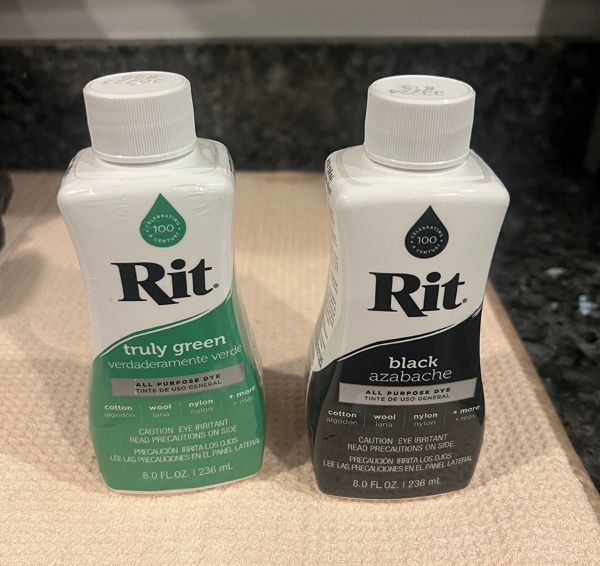
Rit dye is usually only a couple of bucks a bottle. I used an old lunch meat container for the job, but whatever you use, plan on not putting it back into service for food use.
Boil some water in a kettle, just 12oz or so. While that’s going on, put on some latex gloves. Walk around your house while the water is boiling and make the appropriate number of jokes and gestures with your gloves on. After you’re told to leave everyone alone, go back and pour your dye into your project container. Don’t add your scales yet.
Try to use the smallest container that will allow you to fit the entirety of the scales under the solution. Start with a small amount of dye, just a couple of tablespoons. If you’re adding black to darken the color, be very sparing with it. You can always dye again to get it darker, but you can’t lighten it back up. I used a couple tablespoons of green, and about half a teaspoon of black.
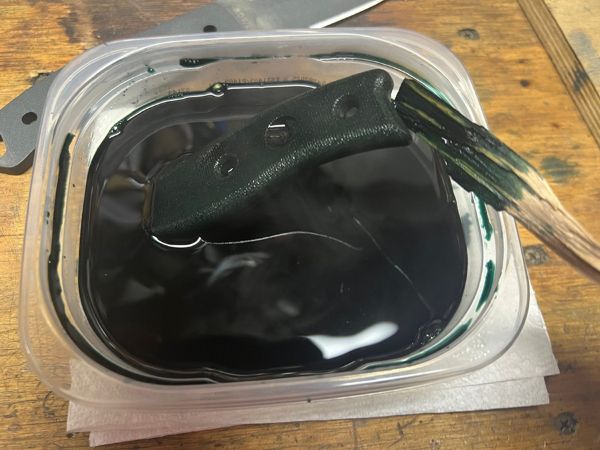
Once your water is boiling, add enough to your container that will cover the scales entirely. Using a stick, stir it gently. At this point, realize that you’re probably going to spill some and slide some sacrificial cardboard under your container. Now’s the time to ease your scales into the solution gently. This is the point you realize it was a good idea to put on gloves.
Let them sit in the solution for about 15 minutes. I turned them to ensure evenness every five minutes or so. I like fiddling with things and this probably isn’t entirely necessary. After soaking, take them out of the solution and set them on some paper towel. Keep in mind the color will lighten slightly as they dry. That’s normal for dye.
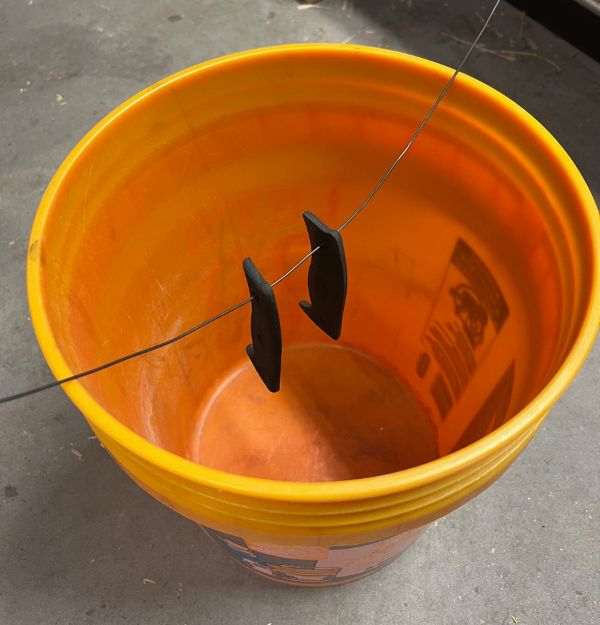
Set them to dry for a while. I hung mine over a bucket overnight, then set them in the sun for the afternoon. Once they’re completely dry, reinstall them as normal, take pictures for the internet, and enjoy.
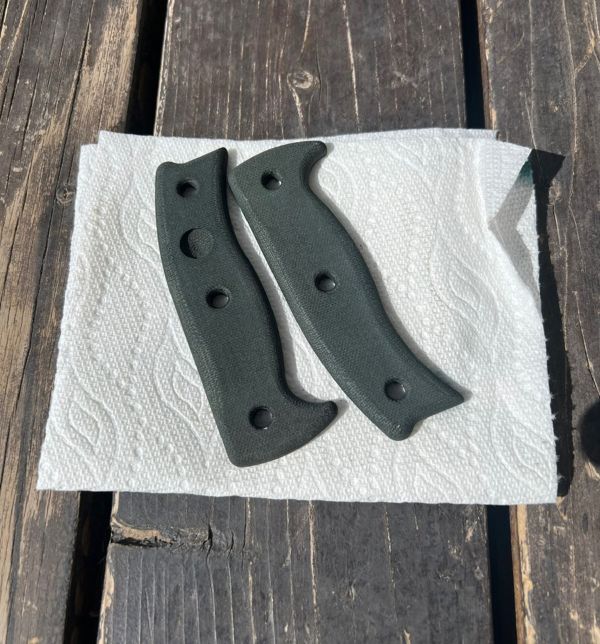
Once they’re dry, the dye should be completely permanent. I’ve washed mine in soapy water and haven’t noticed any fading at all. I’ve used this knife for fish cleaning and fire prep, and it’s been wet and bloody several times. The dye hasn’t come off on me or my gloves at all.
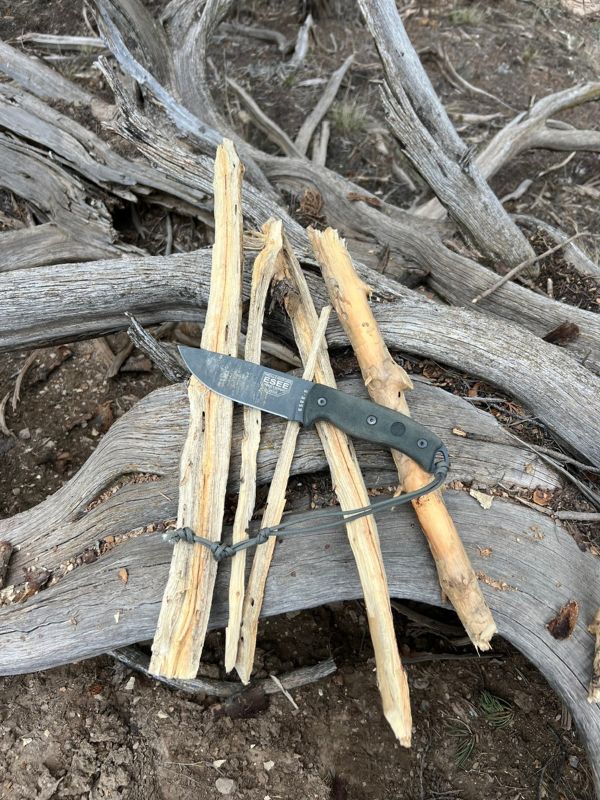
Dying micarta is a fun and inexpensive way to customize your knife. You can always dye them darker, or black, if they don’t come out quite how you’d like. Using something you’ve modded raises the enjoyment factor and makes for a great conversation starter around the campfire. Give it a try and have some fun.
– Luke Causey, Shooting News Weekly