Primary Arms Optics, a Houston-based tactical optics manufacturer founded in 2008, is hiring a Product Development Engineer II to design and develop new optics and products. The role requires a mechanical engineering degree with 3-5 years of firearms or optics industry experience and expertise in manufacturing processes including milling, turning, molding, and casting.
Bear Edge Knives introduces the new 4" Light Gray Aluminum Folder with Flipper, a lightweight everyday carry knife featuring a 440 stainless steel blade, aluminum handle, and flipper deployment. Weighing 3.2 ounces with a $42.99 MSRP, the knife offers practical functionality and reliable performance for cutting tasks.
Bear & Son Cutlery, based in Jacksonville, Alabama, has released the White Smooth Bone Block Set featuring nine specialty knives with Sandvik 14C28N stainless steel blades and white smooth bone handles. The 10-piece set includes a chef knife, fillet knife, cleaver, boning knife, santoku knife, four steak knives, and a walnut wood block, priced at $999.99.
BLACKHAWK has released the Garra III Karambit Sideliner, a professional-grade knife featuring a D2 Tool Steel hawkbill blade, ambidextrous thumbstuds, and a sideliner lock. Manufactured by Bear & Son Cutlery in Jacksonville, Alabama, the knife offers four customizable carry positions and weighs 5.1 oz., with an MSRP of $124.99.
CrossBreed Holsters announced the addition of select CIVIVI folding knives to its outdoor and everyday carry gear offerings. Five pocket folders in eight distinct models, including the CIVIVI Yonder, Button Lock Elementum II, Baby Banter, Vision FG, and Over Yonder, are now available through CrossBreed Holsters with special reduced pricing.
In Part 1 of this series, I started at the affordable end of the WE Knife family with the SENCUT Tauron. At $46.50, the Tauron was a pretty straightforward EDC folder. D2 steel, G10 scales, a liner lock and both flipper and thumb stud opening made it a conventional knife that did everything I asked of it.
Moving up to CIVIVI doesn’t mean simply getting a slightly nicer version of the same thing. My next knife, the Slippy Sendy, is about as different from the Tauron as two folding pocket knives can be.
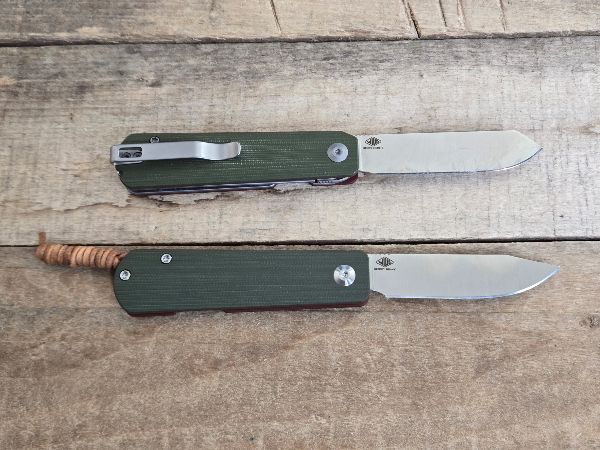
The Slippy Sendy is a modern take on the traditional slipjoint. It’s smaller, lighter and simpler than the Tauron, with no lock, pocket clip, flipper or thumb studs. At $62 (about $52 retail), though, it’s only $15.50 more than the SENCUT.
I’ve had the Slippy Sendy in my EDC rotation for roughly six months alongside the Tauron and the WE knife we’ll get to in Part 3. Of those three, the Slippy (different than the Slippy Sendy) probably spent the least amount of time in my pocket. That’s not really a criticism of the knife. In fact, it’s one of the better slipjoints I’ve used. It’s more a reflection of how I carry knives.
Civivi Sendy (top) Slippy Sendy (below)
A Different Kind of Sendy
The Sendy wasn’t new to me when this one arrived. I previously worked with the original CIVIVI Sendy, a Ben Petersen designed locking folder with a flipper. I liked that knife, so the Slippy Sendy immediately caught my attention.
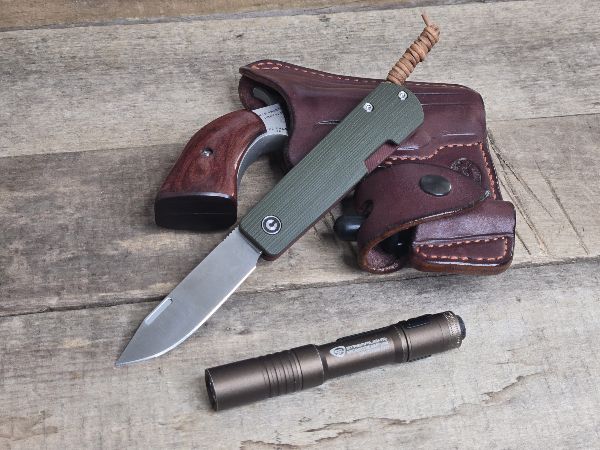
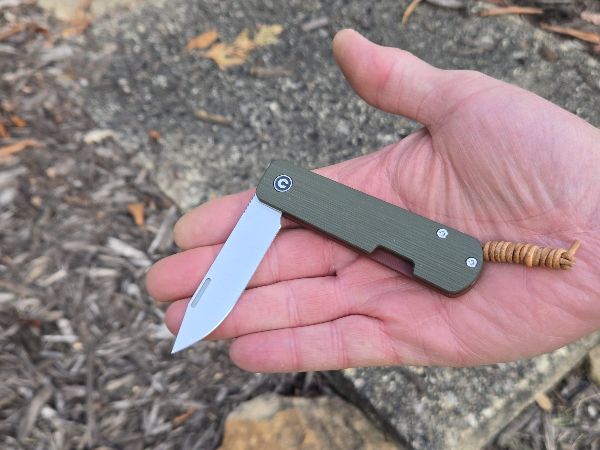
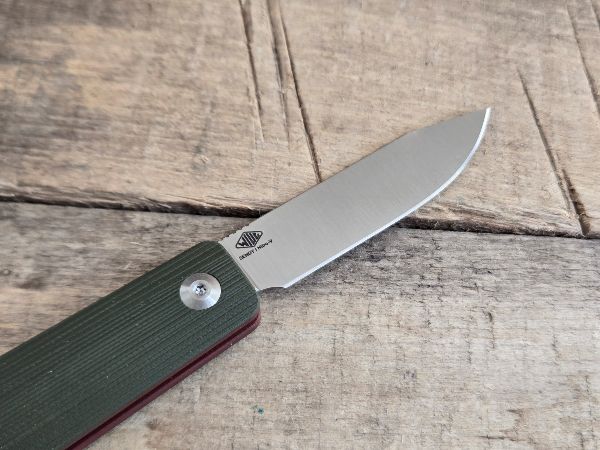
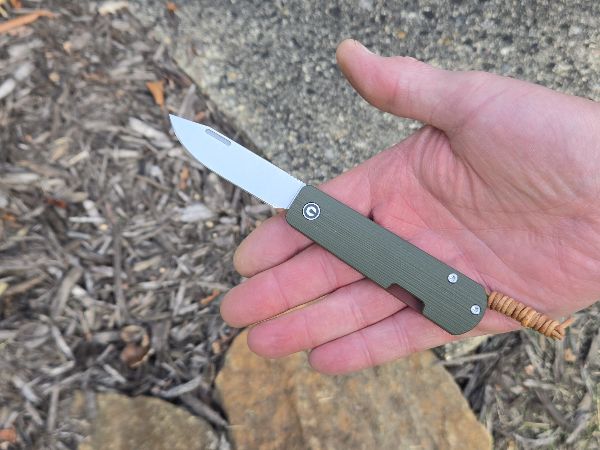
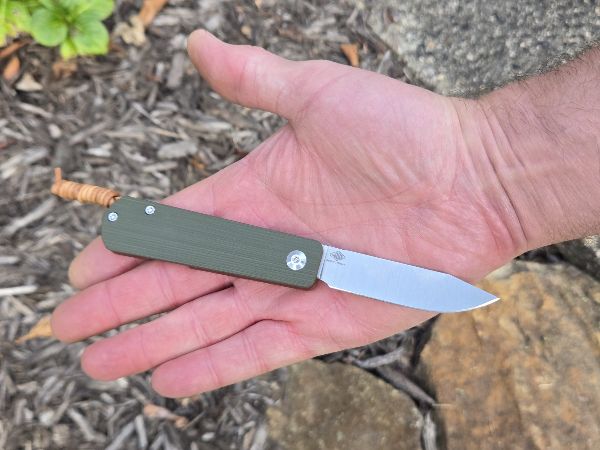
The family resemblance is there, but CIVIVI went in a very different direction this time. My Sendy has a 2.81 inch Nitro-V clip point blade, milled green and red G10 scales and a brown leather coiled lanyard. Instead of a liner lock and flipper, it uses a traditional slipjoint mechanism with a long nail nick.
There’s also another version with yellow(ish) Ultem scales, a black stonewashed spey point blade and black paracord lanyard. I prefer the more traditional appearance of my green G10 and clip point version, but it’s nice that CIVIVI didn’t simply offer two different handle colors. The two versions actually give you a choice of blade profiles as well.
A Slipjoint in a Locking Knife World
I rarely carry a slipjoint as my only knife. Sometimes the Slippy Sendy rode in my pocket along with another locking folder rather than replacing it. Realistically, that’s probably unnecessary. The little Slippy Sendy will handle nearly everything I normally use an EDC knife for. I’ve never needed a pocket knife for defense or some sort of survival situation, but there’s still that “what if?” factor.
I prefer a knife I can open quickly with one hand and a blade that locks in place. Maybe that’s habit or a little paranoia, but it’s what I’m comfortable with. That doesn’t take anything away from the Slippy Sendy. As a slipjoint, it does everything I’d expect it to do and does it very well.
Small Knife, Good Grip
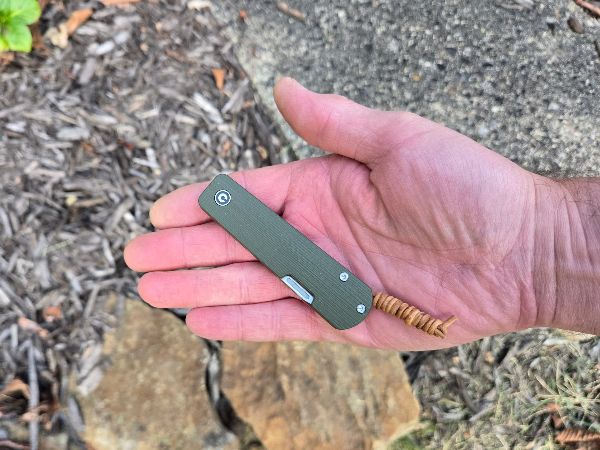
The Slippy Sendy is a small knife, but I can still get about three and a half fingers on the grip. That’s plenty for me since I consider slipjoints light duty EDC knives anyway. The milled G10 has a wood grain type texture that looks good while giving me a secure grip. It also adds a traditional touch despite the modern material.
The coiled leather lanyard adds another interesting visual touch, but it isn’t purely decorative. With my pinky falling near the end of the handle, the lanyard gives it a little extra material to bear against. You certainly don’t need it, and it can be removed if you don’t like lanyards, but I found that it serves a purpose beyond aesthetics.
The nail nick is deep and easy to get to, thanks to the cutout in the handle scales. More importantly, CIVIVI got the backspring tension right. It’s strong enough that the blade feels secure when it’s fully open, without making you fight the knife to get it there. On the other end, it doesn’t snap shut like a mousetrap threatening to lop off your fingers.
There’s also a positive half stop that gives you another measure of control while opening and closing the blade. A slipjoint will never provide the same security as a locking knife, but the Slippy Sendy doesn’t feel tentative or flimsy when you’re using it.
The Case for No Pocket Clip
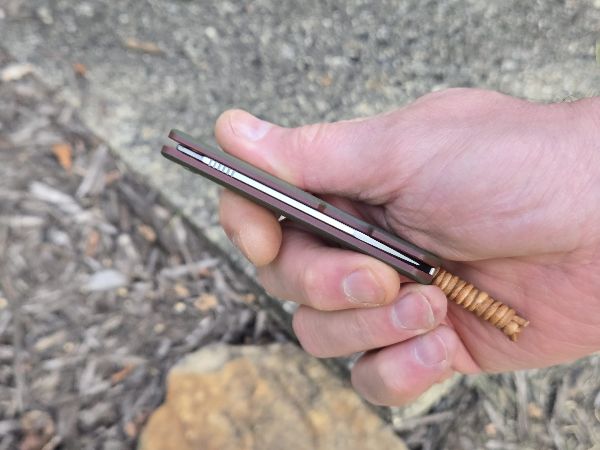
I generally prefer a pocket clip, but the Slippy Sendy works just fine without one. It’s thin, compact and light enough that I can drop it in my pocket and pretty much forget about it until I need it.
It actually reminds me of the original Gerber LST in that regard. I’ve always considered the LST the gold standard for clipless pocket carry. They’re very different knives, but both have that same thin, lightweight feel that makes them easy to carry loose in a pocket.
A Traditional Blade With Modern Steel
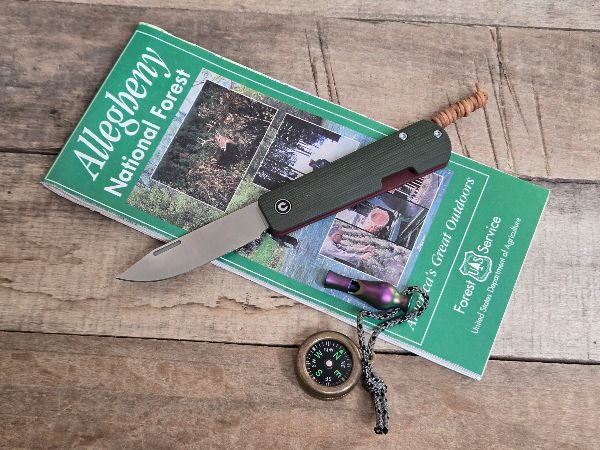
The clip point blade is a fairly traditional pattern, and it works well for the kinds of jobs I use a small EDC knife for. I’ve opened boxes and packages with it, cut tape and cordage, and done some casual whittling.
The relatively high, thin grind also makes it a very good slicer. It’s no kitchen knife, but it handles the random apple just fine and works surprisingly well for slicing up meat and cheese when an unexpected charcuterie tray breaks out.
CIVIVI uses Nitro-V steel on the Slippy Sendy. For what is ostensibly a light duty pocketknife, the steel is probably better than it really needs to be. I’m certainly not complaining about that. Mine came with an excellent factory edge, and that edge has held up well through my use. More importantly for the point of this series, CIVIVI gives you that upgraded steel without making the knife particularly expensive. At $62, we’re still firmly in reasonably priced EDC territory.
Traditional, But Not Quite
Aesthetically, I love the lines of the Slippy Sendy. It’s simple and traditional, but it’s also not. The overall shape, nail nick and slipjoint mechanism would be perfectly familiar on an old fashioned pocketknife. The OD green G10 and dark red liners give it a more contemporary look without falling back on tactical black or going with colors that scream for attention.
It checks all the boxes for a gentleman’s knife and fits comfortably in more genteel company. I actually carried mine to a wedding and used it at one point without raising any eyebrows. On the other hand, I’d be just as comfortable tossing it in my outdoors kit. It’s a good-looking knife, but there’s nothing delicate about it.
A Different Step Up
The CIVIVI Slippy Sendy makes the second step in this series more interesting than I expected. Moving from SENCUT to CIVIVI didn’t simply get me a more expensive version of the Tauron. The Slippy Sendy is a completely different approach to an EDC knife. It’s smaller, lighter and deliberately more traditional. At the same time, the Nitro-V blade, excellent fit and finish, positive backspring and thoughtful details make it feel like more than just an inexpensive slipjoint.
It got the least pocket time of the three knives in this series, but that’s more about my preference for locking folders than the Slippy Sendy itself. There’s very little for me to complain about here. It’s a great little utility knife, and one of the better slipjoints I’ve used. It’s also proof that moving up the WE Knife ladder doesn’t necessarily mean getting more features. Sometimes it means getting a more refined version of a very different idea.
For Part 3, we’re going to make a much bigger jump. We’ll move from the $62 CIVIVI to the WE Knife Essential Knight, where premium steel and titanium construction push the price north of $350. That’s where we’ll really get to see what spending more within the WE family gets you.
CIVIVI Slippy Sendy C24075B-1 Specifications
Overall Length: 6.52 inches Blade Length: 2.81 inches Closed Length: 3.70 inches Blade Steel: Nitro-V Blade Type: Clip point Weight: 1.65 ounces including lanyard Handle: Green and red G10 Lock: Slipjoint Pivot: Bronze washers Opening: Nail nick Lanyard: Brown leather Made In: China MSRP: $62